How do you protect a new concrete driveway during its first Michigan winter?
Avoid salt and other deicers for at least the first year after your new driveway is poured. Also be sure to remove snow quickly and beware of using large, heavy equipment which can damage your new driveway.
Even though warm temperatures have been slow to move out of our area this fall, there is no doubt that winter is on its way. The leaves are turning, nights are starting to cool and very soon, we will be getting out our winter coats and preparing our homes for the cold, harsh winter months. If you have recently had a new concrete driveway installed, you want to pay special attention to it this year, to ensure that it is not damaged by the elements or by the tools that you use to clear the snow and ice that accumulates. Protecting the investment in your brand new driveway is important. Here are some tips to ensure that your driveway will survive its first winter without damage:
- Avoid the Salt – Do not use salt to melt snow or ice on your driveway during the first winter. Your new concrete strengthens as it continues to cure for the first 12 months after it’s been installed. Salt will lower the freezing point of the moisture (thawing it out), causing the water to melt and refreeze frequently. Your new concrete is not strong enough to withstand this freeze/thaw process.
- Skip Deicers – Other popular deicers like rock salt, calcium chloride, magnesium chloride, and the fertilizer-based deicers should never be used on concrete driveways, even after the first year. This causes stress on your concrete, leading to surface scaling, pitting, and cracking that may eventually call for concrete restoration.
- Stick to Sand and Similar Products – Sand and traction grit are recommended over salt to help clear snow, but these options have potential drawbacks as well including damage if the tires from your vehicle spin and grind the sand into your newly installed driveway. In addition, sand can accumulate around your yard and cause issues for your lawn and drainage systems.
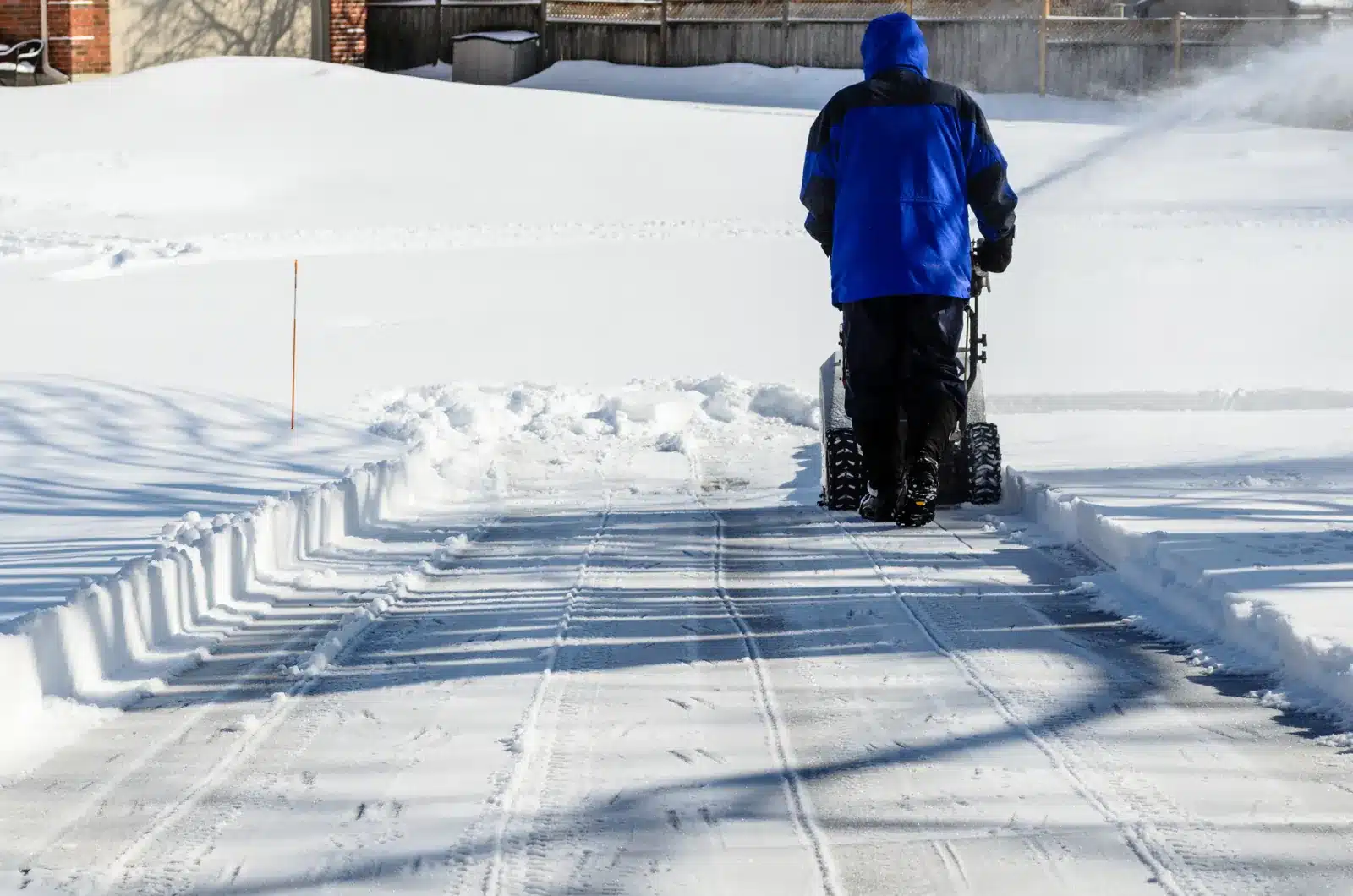
- Be Careful with Equipment – Large equipment like plow blades, snowblowers and other devices with metal edges can also scratch, scrape and damage the concrete below. This type of equipment should be managed very carefully on newly installed concrete.
Best Ways to Remove Snow and Ice From a Newly Installed Driveway
For those early snows after your driveway is poured (for at least a year), we recommend blowing or removing snow as quickly as possible, before it thaws and refreezes and can get packed down on your driveway. It may take more time and effort, but you will protect the integrity of your brand new driveway.
The team at Liberty Works Concrete can answer questions honestly about how best to care for your new driveway during its first Michigan winter. We often recommend a concrete sealer that can be applied to a new driveway that will protect it from the elements this winter. We also recommend talking to contractors who you might hire to clear your surfaces so that they understand that your driveway is new and snow/ice needs to be removed carefully. If your contractor will put in writing their plans for protecting your driveway while clearing it, you will have some assurance as well. For more ways to protect a fresh pour, see the biggest mistakes homeowners make with new concrete.
Liberty Works Concrete – Michigan Concrete Driveway Experts
As a small, local business that has been successful in the Michigan area for decades, Liberty Works Concrete is happy to serve as a resource for you, whether we installed your new driveway or not. We are honest, professional and care about our work and each and every one of our clients. For more information about our concrete services and how to protect your concrete this winter, give us a call at (586) 227-7446.