Why is the soil beneath a concrete foundation so important? Even the strongest concrete foundation requires stable, properly prepared ground for support. Poor soil conditions, inadequate compaction, and drainage problems can all lead to settling, cracking, and structural movement over time.
A strong concrete foundation probably brings images to mind of thick concrete walls, sturdy footings, and steel reinforcement. However, it’s what’s underneath the concrete that’s just as important. Any concrete contractor in Metro Detroit that you hire should have extensive knowledge of soil conditions and how they affect the long-term stability of your foundation.
What’s Hiding Beneath Your Concrete Foundation?
Soil can vary not just by region but even by property. Soil in one area can offer relatively stable and consistent support, while soil in another area can vary by moisture levels, temperature, and pressure.
Different soil types offer different compositions and benefits:
- Clay: Retains moisture and may expand and contract depending on temperatures.
- Sand: Drains quickly but can shift or settle if not properly compacted.
- Silt: Can retain water and become unstable.
- Fill soil: Can settle if not properly placed and compacted.
Because of this variation, having site conditions evaluated by a concrete foundation contractor in Michigan is essential.
Clay Soil Can Become a Problem for Concrete Foundations
While clay is common throughout southeastern Michigan, it can pose challenges during foundation construction due to its moisture sensitivity. That’s because the clay can swell when absorbing water, and then shrink when dried.
This repeated cycle can stress out foundation walls or compromise support beneath footings, resulting in:
- Cracks in foundation walls
- Uneven settling
- Gaps around doors and windows
- Sloping interior floors
- Increased pressure against basement walls
What Happens When Soil Isn’t Compacted Properly?
When a heavy building is set on top of loosely packed dirt, the ground slowly compresses. That’s why it’s so important for foundation soil to be properly compacted prior to construction.
Not only does this reduce excess air spaces between soil particles, it allows for a denser, more stable supporting surface. When this step is skipped, differential settlement can occur (one part of the foundation moves more than another).
How Does Drainage Affect the Soil Beneath a Foundation?
Drainage is an important consideration in all this. When water can’t drain properly, it saturates the soil, which can then erode or put pressure on basement walls. Add freeze/thaw cycles into the mix, and even more issues can develop – most notably, frost heaves. This upward movement increases stress on vulnerable foundations.
Your concrete contractor in Metro Detroit can take steps to prevent this through proper grading, drainage systems, waterproofing, and footing depths.
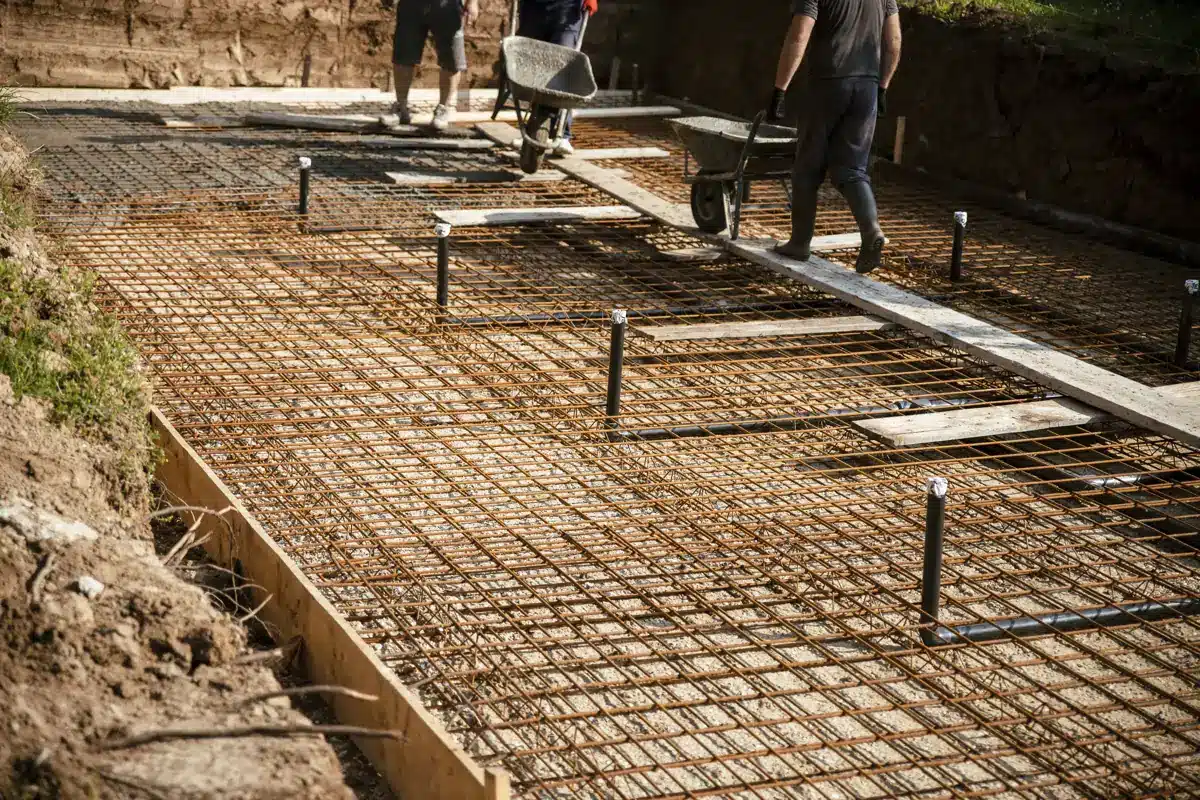
6 Ways Contractors Prepare Soil Before Pouring a Foundation
To prepare the area and ensure support, your contractor will:
- Evaluate soil composition and existing drainage.
- Excavate to the required depth and suitable bearing material.
- Remove unstable or unsuitable soil.
- Compact approved fill where necessary.
- Verify footing dimensions and required frost protection.
- Establish drainage and moisture-control measures.
Can a Strong Foundation Still Fail Because of Poor Soil?
Yes. Unstable supporting soil can compromise even the highest quality concrete and reinforcements. That’s why an experienced contractor will consider both the concrete materials and the soil conditions when creating a foundation.
Contact Liberty Works Concrete
Rest assured, we understand how soil affects the long-term stability of concrete foundations in Michigan. Give us a call today at (586) 227-7446 to request a free estimate.